
Criminal Court Records in Muskogee County
A Muskogee County criminal court record is the case file opened when the State files a criminal charge. It is not the same as an arrest record. The arrest is the booking event, while the court record is the case that may follow it. The Court Clerk opens this file and keeps it as a permanent record. It tracks each step from the first filing to the last order entered by the judge. For a closer look at the charges themselves, the Muskogee County arrest records and charges page breaks down how a prosecutor turns an arrest into filed counts.
The District Court hears criminal cases in Muskogee County. It is the trial court of general jurisdiction for the county, and it sits in Judicial District 15 with Adair, Cherokee, Sequoyah, and Wagoner Counties. Felony cases carry a CF prefix, and misdemeanor cases carry a CM prefix. Both move through this court. The Municipal Court handles only city ordinance matters, so those files stay with the city. Broader civil, family, and probate files sit in the wider set of Muskogee County court records.
How to Search Muskogee County Criminal Court Records
The main search tool for Muskogee County criminal court records is On Demand Court Records, known as ODCR. The county Court Clerk links to it as the Search Court Records option. ODCR covers participating Oklahoma District Courts, and Muskogee is one of them. Basic searching and docket viewing are free. You can look up a case by the name of the person charged or by the case number.
- Open the Court Clerk page and use its Search Court Records link to reach ODCR.
- Search by party name in Last, First format, or enter a case number if you have one.
- Choose Oklahoma District Courts as the court group, then pick Muskogee as the court.
- Use the case type menu to limit results to felony or misdemeanor proceedings, then set a date range to narrow common names.
- Open the case to read the docket, the plea, and the disposition, and request a certified copy from the Court Clerk if you need one for legal use.
For a record that reaches beyond one county, the Oklahoma State Bureau of Investigation keeps the statewide criminal history. The Oklahoma State Courts Network is the statewide docket backup, and it lists Muskogee County District Court in its court menu. Some OSCN pages ask for a quick human verification step before the search loads.
Stages of a Criminal Case
A criminal case moves through set stages, and each one leaves a mark in the court record. The docket lists these events in order, so you can trace a case from the first charge to the final judgment. The flow below shows the path most cases take.
Case flow: Charges Filed › Arraignment › Pretrial / Motions › Plea or Trial › Disposition › Sentencing
| Stage | What Happens |
|---|---|
| Arraignment | The judge reads the charges, advises the defendant of rights, and takes a first plea. Bond may be set or reviewed here. |
| Pretrial / Motions | Both sides file motions, share evidence, and argue legal points. Hearings and continuances show up as docket entries. |
| Plea or Trial | The case ends in a plea or goes to trial before a judge or jury. The plea or verdict is recorded for each count. |
| Sentencing | After a guilty plea or verdict, the judge orders the sentence. Fines, jail or prison time, and probation terms are entered. |
The State drives the case through these stages. The District 15 District Attorney decides which charges to file, prosecutes the case, and may offer a plea or recommend a sentence. The county District Attorney page names the prosecutor and lists the office address and phone.
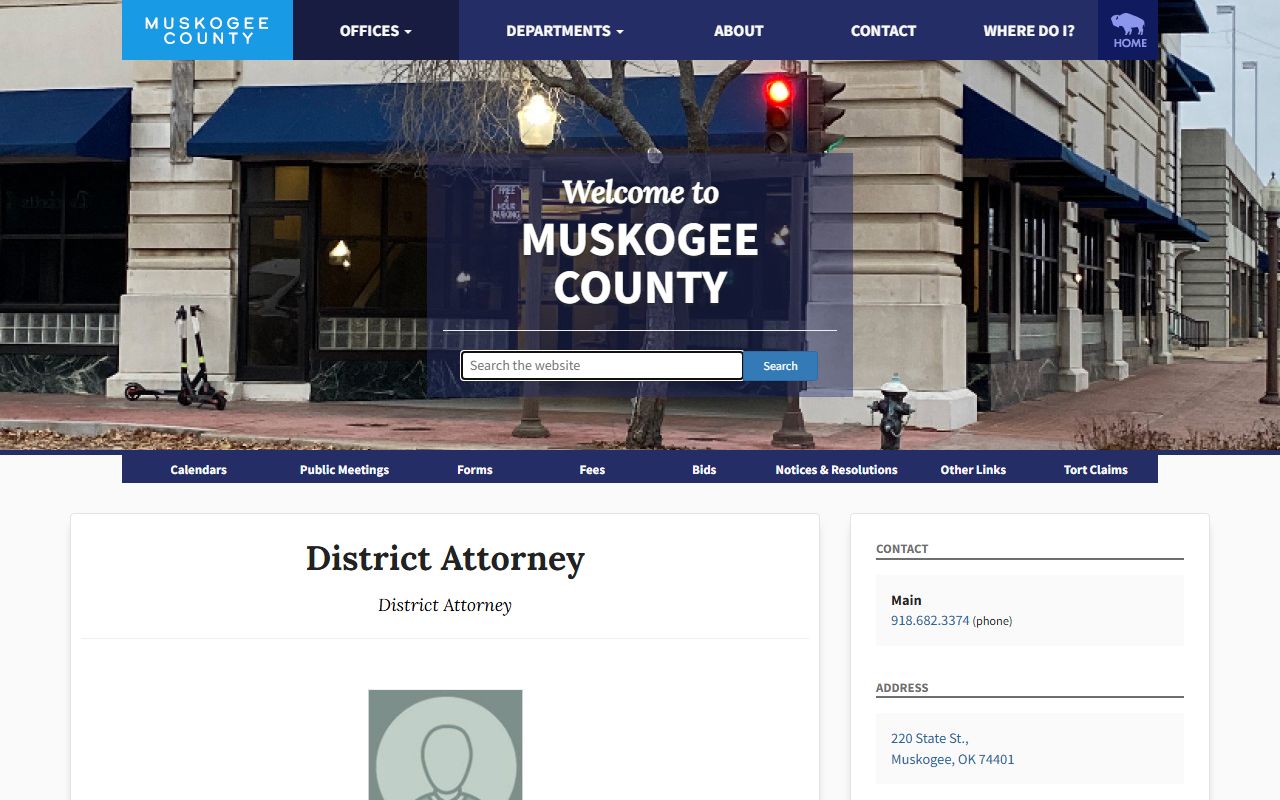
The District Attorney's filing choices set the case in motion and shape what the court record will hold.
Every person charged has the right to a lawyer. When a defendant cannot afford one, the Oklahoma Indigent Defense System assigns court-appointed counsel for Muskogee County cases. The OIDS Muskogee coverage page names the local contractor and the District 15 area it serves.
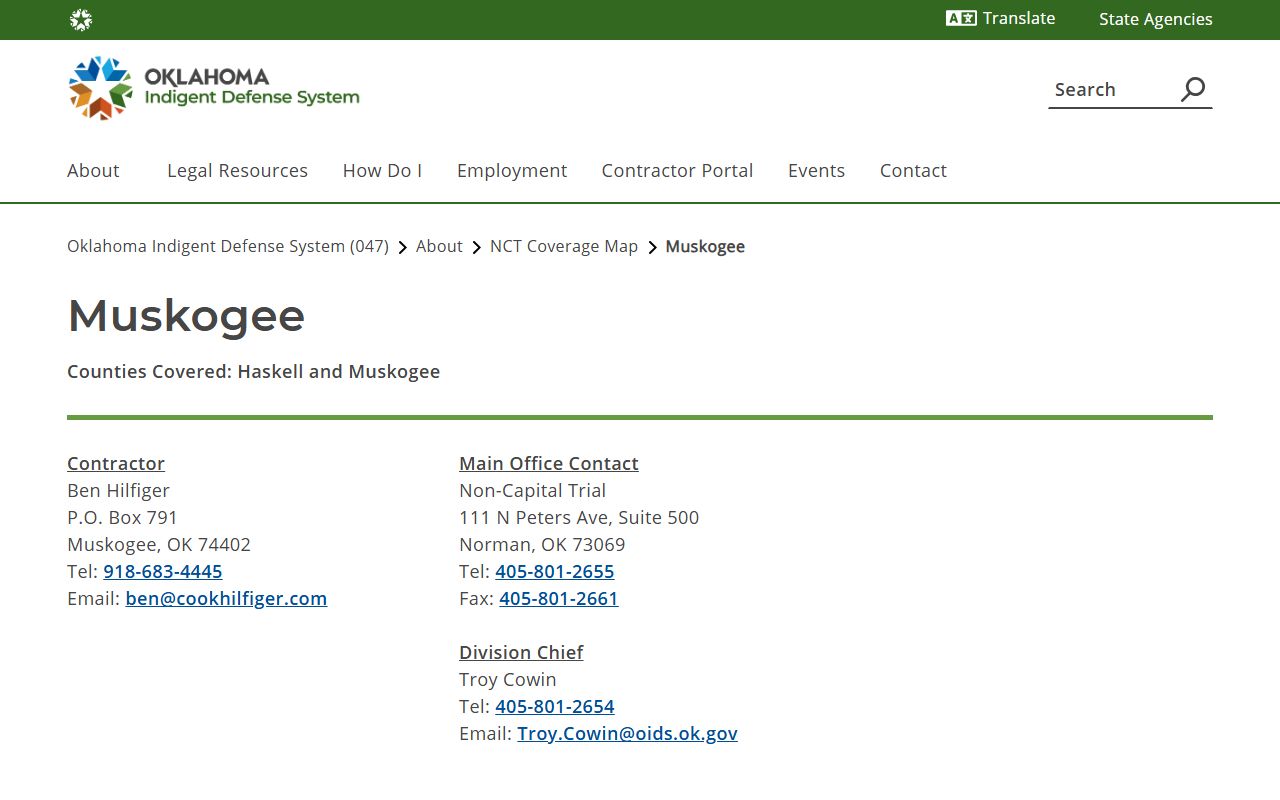
Defense filings, appearances, and motions also become part of the case docket as the matter moves along.
What a Muskogee County Criminal Court Record Shows
A criminal case file holds far more than a name and a charge. It tracks each party, each filing, and each order from start to close. The table below lists the core fields you will see on most online records, though document images may be limited or paid.
| Field | What It Shows |
|---|---|
| Case Number | The prefix, year, and sequence that name the case, such as CF for a felony or CM for a misdemeanor. |
| Defendant | The name of the person charged, along with the State as the party bringing the case. |
| Charges | Each count, the statute cited, and the level of the offense as filed by the District Attorney. |
| Plea | The defendant's response to each count, such as guilty, not guilty, or no contest. |
| Disposition | The outcome of each charge, such as a conviction, a dismissal, or a deferred sentence. |
| Sentence | The penalty ordered after a conviction, including fines, jail or prison time, and probation terms. |
Bonds, costs, hearing dates, and the judge assigned also appear in the file. The docket lists each step in date order, which is the quickest way to see where a case stands.
Charges vs. Convictions in Muskogee County
Being charged is not the same as being convicted. A criminal court record can show counts that were later dropped, dismissed, or that ended in an acquittal. A charge is only an accusation. A conviction is a finding of guilt after a plea or a verdict. Reading a record well means telling the two apart.
| Charge | Conviction | |
|---|---|---|
| Stage | Accusation | Verdict or plea |
| Burden of Proof | Probable cause | Beyond a reasonable doubt |
| Public Record | Yes | Yes |
A dropped or dismissed charge stays in the file unless the record is later sealed or expunged. So a person can have charges on record without any conviction at all.
Reading Muskogee County Criminal Dispositions
The disposition is the outcome of a charge, and the sentence is the penalty that follows a conviction. Court files use short terms for both. A quick glossary clears up the words that trip up most readers.
- Disposition
- The final result of a charge or the whole case.
- No Contest
- A plea that accepts the penalty without admitting guilt.
- Deferred Sentence
- A delay of judgment that can end in a dismissal if terms are met.
- Probation
- Supervision in the community under court conditions.
- Nolle Prosequi
- A prosecutor's decision to drop a charge.
The District Attorney can recommend a sentence as part of a plea deal, but the judge enters the final order. The District 15 office serves Muskogee and four nearby counties, and its details appear on the state council page.
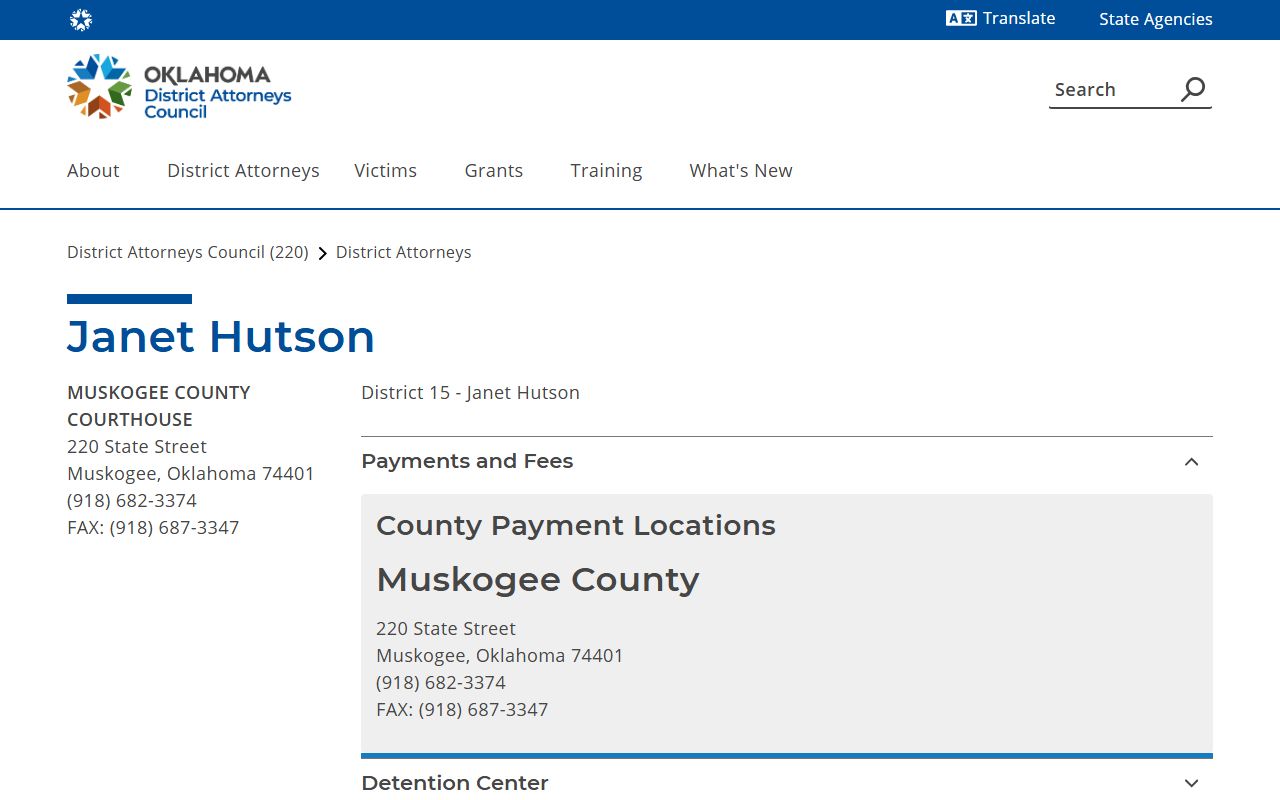
The District 15 District Attorney page confirms the courthouse address and the contact line for case questions in Muskogee County.
Sealed vs. Expunged Records
Some criminal records are closed by law or by court order. A sealed record is hidden from ordinary public view but still exists. An expungement goes further and treats the record as if it never happened. The two are not the same, and they reach different parts of a file.
| Sealed | Expunged | |
|---|---|---|
| Visibility | Hidden from public view | Removed and treated as if it never existed |
| Law Enforcement | Limited access remains | Very limited access |
| Eligibility | Set by court order or statute | Listed under 22 O.S. Section 18(A) |
The Oklahoma State Bureau of Investigation lists the expungement categories under 22 O.S. Section 18(A). OSBI cannot pre-approve eligibility, and the State may object even when a person appears to qualify. The petition is filed in the District Court that handled the case, which is Muskogee County for local matters.
Note: The age of a record alone does not decide expungement eligibility, and a sealed court file does not erase private copies that others saved earlier.
Public Access to Muskogee County Criminal Records
Oklahoma treats government records as open by default. The Oklahoma Open Records Act sets the policy, and criminal case files held by the Court Clerk fall under it. Anyone may view a public criminal record. You do not need a reason or a tie to the case. Copy and certification fees apply when you want paper or certified versions.
Key Statutes:
Oklahoma Code § 51-24A.5 - Public records are open to all unless a specific law makes them confidential.
Oklahoma Code § 51-24A.8 - Law-enforcement records are open for public inspection, though some investigative details stay protected.
When a record is not online and is not sealed, the fallback is a request to the Court Clerk, who is the permanent keeper of District Court files. A name or a case number speeds up a counter or mail request.
Background Check Considerations
A free docket search is fine for personal use. It is not the same as a formal background check. A regulated background check follows the federal Fair Credit Reporting Act, draws on verified sources, and applies when a record will be used for hiring, housing, or credit. A casual ODCR lookup carries none of those safeguards, so it can miss sealed cases or show data that needs a second check.
Important: This site is not a consumer reporting agency under the FCRA, and its records may not be used for employment, housing, credit, or insurance screening.
Restricted Criminal Court Records in Muskogee County
Not every criminal file is open. Juvenile cases are not treated like adult dockets, so the Court Clerk handles those requests with limits. Sealed and expunged cases drop out of public view. Mental health proceedings carry access limits because the information is sensitive. Some search-warrant materials stay sealed while an investigation is open.
Personal identifiers are also withheld. Social Security numbers, financial account numbers, protected victim details, and information about minors are redacted even on otherwise public cases. When a record does not appear online, that does not always mean it is missing. It may be sealed, very recent, or held only at the clerk's counter. Active warrant entries can also show in a case, and a county warrant search is the way to check and clear those.