
What Probate Covers in Muskogee County
Probate is the court process that settles a person's estate and oversees the care of people and property when the law requires it. In Muskogee County, probate is not its own courthouse or office. It runs as the Probate Division of the Muskogee County District Court, the general trial court for the area. The county does not publish a separate probate court. The Court Clerk works with the probate division, and an assigned District Court judge hears the docket.
Probate covers far more than a simple will. The court groups these matters into several case types, and each one creates its own file.
- Probate proceedings and probate miscellaneous proceedings.
- Filing of wills, both before and after a death.
- Guardianships of minors and of incapacitated adults.
- Conservatorship of an estate or a person.
- Trust proceedings and related disputes.
- Estate administration, heirship, inventories, creditor notices, accountings, and final distributions.
Most of these files are open to the public. A few, such as guardianships that involve a minor or a person's health, carry tighter limits.
Probate Terms Defined
Probate files lean on words that trip up first-time readers. A short list of plain meanings clears up the most common ones before a search begins.
- Testator
- The person who made the will.
- Executor
- The person named in a will to carry it out and settle the estate.
- Administrator
- The person a court names to handle an estate when there is no valid will or no named executor.
- Intestate
- Dying without a valid will, which sends the estate to state law for division.
- Guardianship
- Court-supervised authority over the care of a minor or an adult who cannot manage on their own.
- Conservatorship
- Court-supervised authority over another person's money or property.
How to Search Muskogee County Probate Records
The main tool for a Muskogee County probate records search is On Demand Court Records, known as ODCR. The county Court Clerk links to it as the Search Court Records option, which makes it the locally endorsed path. ODCR is free to search, and the ODCR pricing page confirms that basic searching and docket viewing cost nothing. Probate cases use a PB prefix on the case number, though related guardianship and trust matters may carry their own codes.
Start with what you know. A decedent's name, a guardian's name, or a case number all narrow the list. Common names return long results, so any extra detail helps.
- Open the Court Clerk page and follow its Search Court Records link to reach ODCR.
- Choose Oklahoma District Courts as the court group, then pick Muskogee as the court.
- Search by party name in Last, First format, using the estate name, the decedent, the guardian, or the petitioner.
- Set the case type to Probate Proceedings, Probate Miscellaneous, Guardianships, Conservatorship, Filing of Wills, or Trust Proceedings.
- Enter the PB prefix and year in the case-number path when a clerk notice or order gives one.
- Use a filed-date range to find older estates or to sort a common name.
- If nothing shows online, check OSCN for Muskogee County District Court or call the Court Clerk.
Muskogee County Probate Search Fields
ODCR uses one search form for every case type, including probate. Most fields are optional, so a name alone can return results. The table below shows how each field works for a Muskogee County probate records search.
| Field Label | Type | Required | Notes / Format |
|---|---|---|---|
| Court group | Dropdown | No | Oklahoma District Courts |
| Court | Dropdown | No | Pick Muskogee for county District Court probate cases |
| Party name | Text | No | Estate name, decedent, guardian, petitioner, or respondent |
| Type of case | Dropdown | No | Probate Proceedings, Probate Miscellaneous, Guardianships, Conservatorship, Filing of Wills, Trust Proceedings |
| Full case number | Text plus code | No | PB or another probate-related prefix when known |
| Filed date range | Date | No | Useful for older estates or common names |
| Activity date | Date | No | Narrows by the most recent docket activity |
Where Muskogee County Probate Cases Are Filed
Every probate filing in the county goes to the Muskogee County Court Clerk. The clerk records, files, and keeps the permanent record of the proceeding. The Associate District Judge page names Judge Norman Thygesen as the judge responsible for the probate docket, along with divorce, juvenile, and criminal matters. Copies and certified copies are requested from the same office, whose full role is set out on the Muskogee County Court Clerk page.
A petition, a guardianship request, or a will filing opens the case. The court then schedules notices, hearings, inventories, orders, and a final accounting. Each step becomes a docket entry unless it is sealed.
Muskogee County Court Clerk
200 State St., 2nd Floor
Muskogee, OK 74401
Mailing: P.O. Box 1350, Muskogee, OK 74402
918-682-7873
Hours: 8:00 to 4:30 (Open at Noon)
Note: A free docket printout from ODCR is not a certified copy, and many estate and title tasks require the certified version that carries the clerk's seal.
What Muskogee County Probate Records Show
A Muskogee County probate record follows an estate from the first filing to the final order. The file names the people involved and tracks each step the court takes. Document images may be limited or paid, but the docket itself is free to view.
Common contents include the will when one was filed, the letters that grant an executor or administrator authority, the inventory of estate property, creditor notices, accountings, and the order that distributes what is left. Guardianship and conservatorship files add reports on the ward and the handling of their property. Party names cover the decedent, the petitioner, the personal representative, heirs, and any guardian or conservator.
Estate Property and Muskogee County Land Records
Probate often moves land from a person who died to the heirs or buyers who take it next. Those real-property transfers do not stay with the court alone. Deeds, mortgages, and liens tied to an estate are recorded with the Muskogee County Clerk, a separate county office at the Broadway courthouse. The county sits in eastern Oklahoma, and its records reach back to the era described in the Oklahoma Historical Society entry for the city of Muskogee.
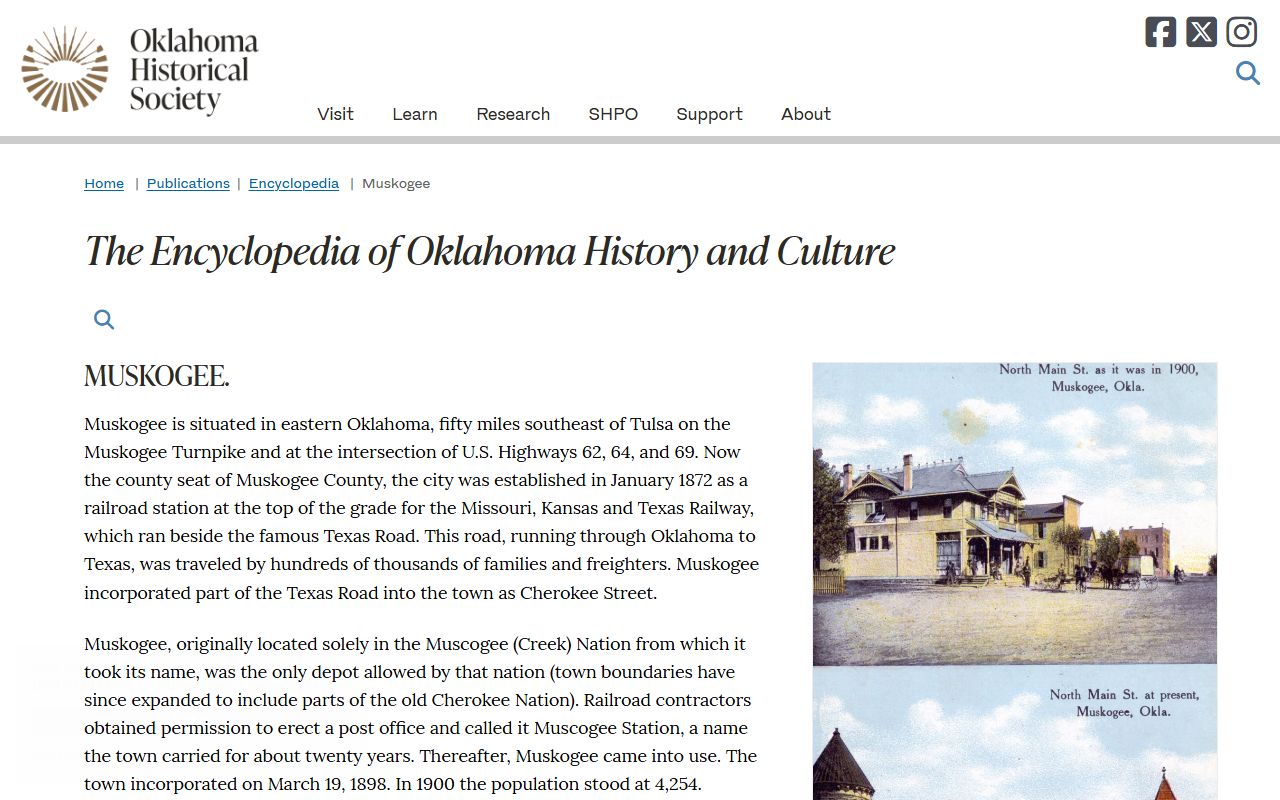
That long history means many older estates touch land that has changed hands several times, so a full picture often needs both court and recording files.
The Muskogee County Clerk holds those land records and offers a free property-monitoring tool. Heirs and owners can sign up at Okcountyrecords.com to watch a name or a property and get notice when a document is filed against it.
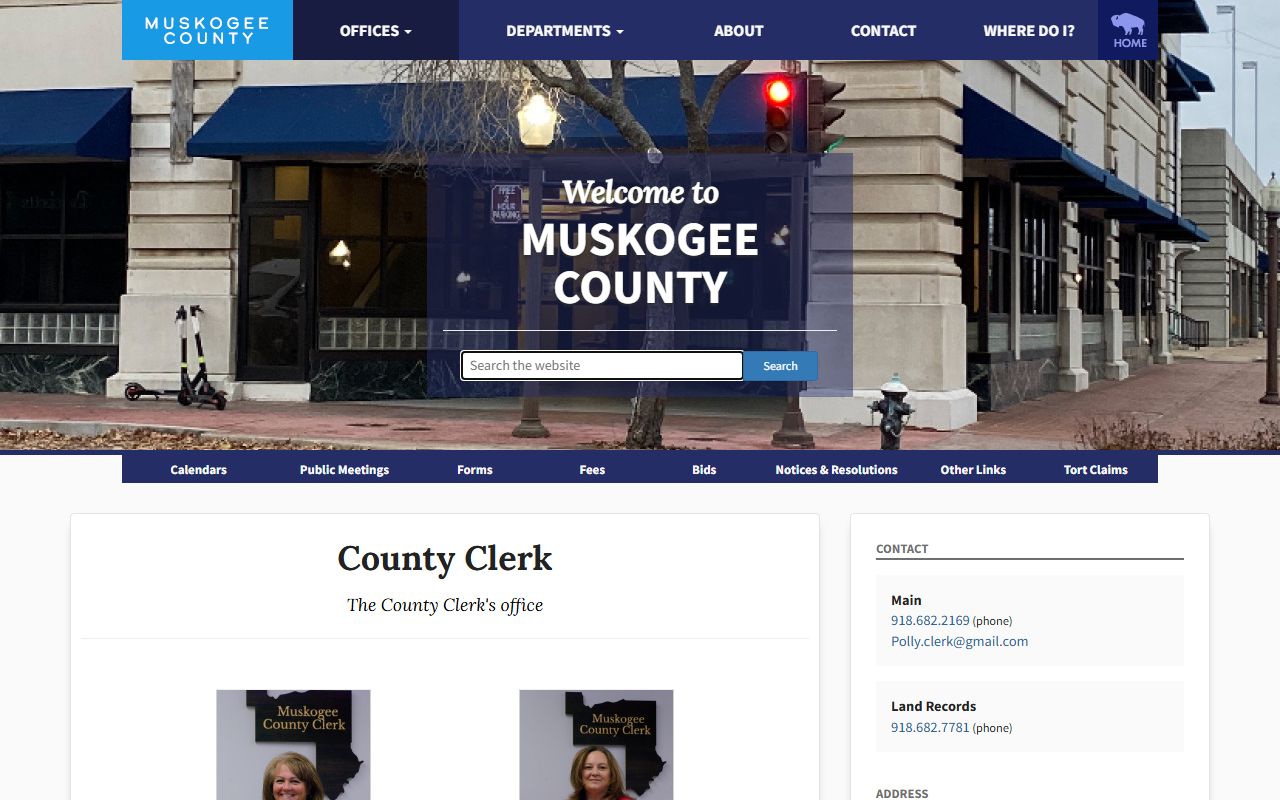
For an estate that includes a house, farmland, or mineral rights, the County Clerk record confirms how title moves once the probate court signs its orders.
County Clerk Recording and Copy Fees
Probate filing fees for the court are not published on the county's pages. The county fee page instead links to the OSCN Court Clerk fee and bond schedules for District Court charges, so confirm the exact probate and copy cost with the Court Clerk before filing. The recording and copy fees below are the County Clerk land-record charges drawn from the official Muskogee County fee page. They apply when estate property is deeded or a recorded document is copied, and they are separate from any court probate fee.
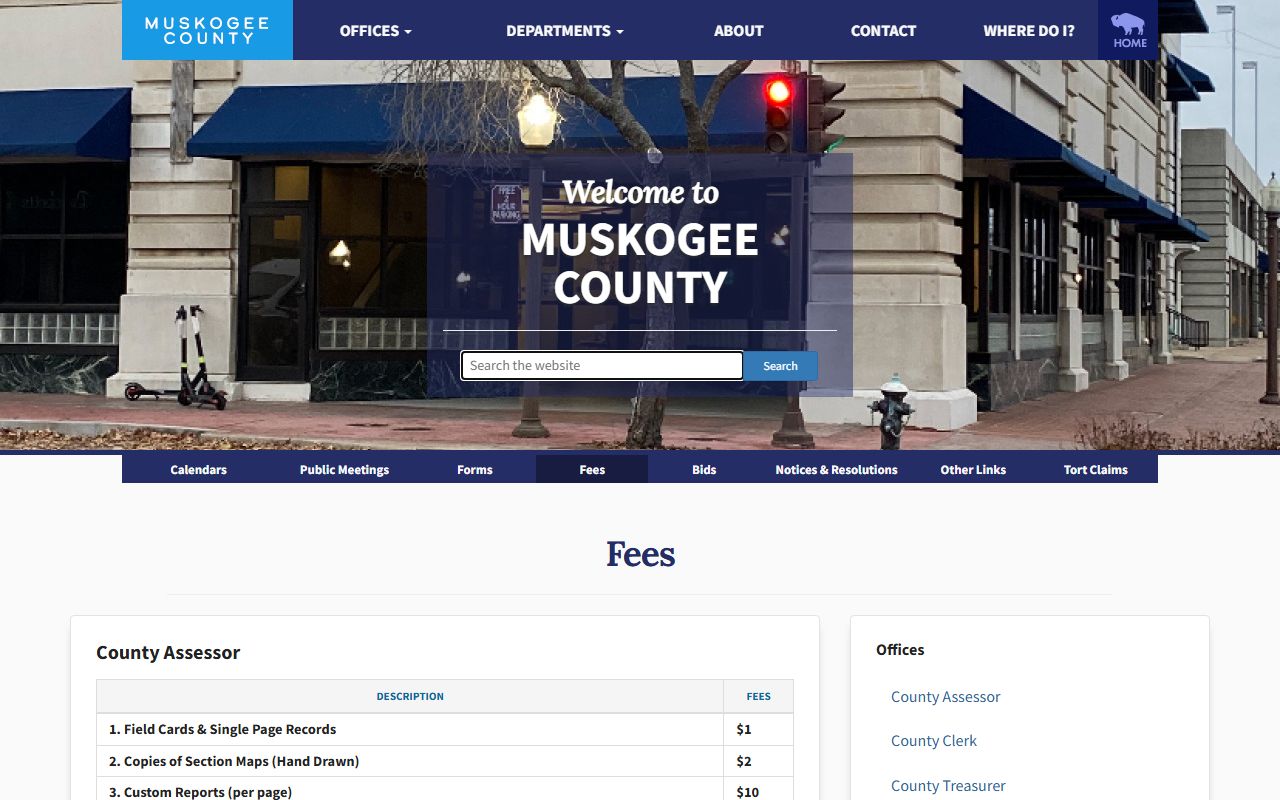
These amounts cover the land-records side of an estate, not the court filing itself, so read the table as County Clerk charges.
| County Clerk Item | Fee |
|---|---|
| Documentary stamp tax | $0.75 per $500 of consideration |
| First page of deeds, mortgages, and certain documents | $8.00 |
| Each additional page of the same instrument | $2.00 |
| First page of non-conforming documents | $25.00 |
| Each additional non-conforming page | $10.00 |
| Preservation fee per document filed | $10.00 |
| Photographic copies of records | $1.00 per page |
| Certifying a document | $1.00 |
Older Muskogee County Estate Files
Not every estate file sits online. ODCR and OSCN index newer cases well, but older estates may predate the digital record or sit in storage. For those, the Court Clerk is the keeper of the permanent file.
An in-person search at the clerk counter often works best for an old probate matter. Bring a name, an approximate year, and a case number if any notice or order ever listed one. Mail and phone requests reach the same office when a trip downtown is not possible. Marriage and divorce filings sit on a different docket, broken down on the Muskogee County marriage and divorce records page.
Restricted Muskogee County Probate Records
Open access is the rule, but probate carries real exceptions. Guardianship files often hold sensitive detail about a child or an adult who cannot care for themselves, so the court limits parts of those records. Health information inside a guardianship or a mental-health-related matter may be sealed or withheld.
Personal identifiers, such as Social Security numbers and financial account numbers, are redacted even on otherwise public estate files. A judge can also seal a full case for cause. When a record does not appear online, that absence may reflect a restriction rather than a missing file, and the Court Clerk can confirm whether access is limited.
Note: A guardianship that protects a minor or an incapacitated adult may shield details that an ordinary estate case would show in full.