
Active Warrants in Muskogee County
Warrants in Muskogee County come from courts and are served by law enforcement. A judge or magistrate signs the order first. The City of Muskogee Municipal Court issues warrants for unpaid city tickets and ordinance cases. The District Court issues criminal and bench warrants in felony, misdemeanor, and other matters. The Muskogee County Sheriff serves county warrants and keeps a public Most Wanted list. There is no single countywide database that shows every active order in one place. So a full check often touches more than one office.
Warrant information reaches the public in a few ways. The city posts a name-based local warrant search online. The District Court docket shows warrant events such as issue, recall, and failure to appear when a case is public. The sheriff publishes a wanted-person list, but that list is not a complete warrant file. Each source updates on its own schedule, so a record can lag behind real events. Confirm any hit with the office that issued the order before you act on it.
Warrants usually trace back to a single event. A missed court date can turn a simple ticket into a bench warrant. A fresh arrest can bring an arrest warrant signed on probable cause. A judge can order a search warrant during an open case. Because the city, the District Court, and the sheriff each manage their own orders, one person could carry a city warrant and a county warrant at the same time. Checking just one source can leave a real warrant hidden.
Types of Muskogee County Warrants
A warrant is a court order. It lets officers arrest a person, search a place, or bring someone before a judge. The kind of warrant depends on what the court wants done. The main types show up across both city and county cases.
- Arrest warrant - issued when there is probable cause to believe a person committed a crime.
- Bench warrant - issued by a judge, often for a missed court date or contempt.
- Search warrant - allows officers to search a named place or item for evidence.
- Capias / failure-to-appear - a warrant-like process used to bring a person to court.
Most warrant entries you see online are arrest or bench warrants. Search warrants are often held back while a case is still open.
How to Search City of Muskogee Warrants
The City of Muskogee runs the only name-based warrant search the local area posts online. It covers city warrants, the kind tied to unpaid tickets and ordinance cases. A match does not confirm a live warrant on its own. The City of Muskogee Municipal Court says to verify any returned name with the Court Clerk before treating it as real.
- Open the City of Muskogee local warrant search on the city website.
- Type a last name. A first name is optional, and full or partial names are allowed.
- Run the search and read the returned names.
- If your name appears, call the Municipal Court Clerk at 918-680-3101 to confirm the warrant and the balance owed.
The city's tool sits inside the Municipal Court section of the official site, the same Muskogee warrant search page residents use to check for a city hold.
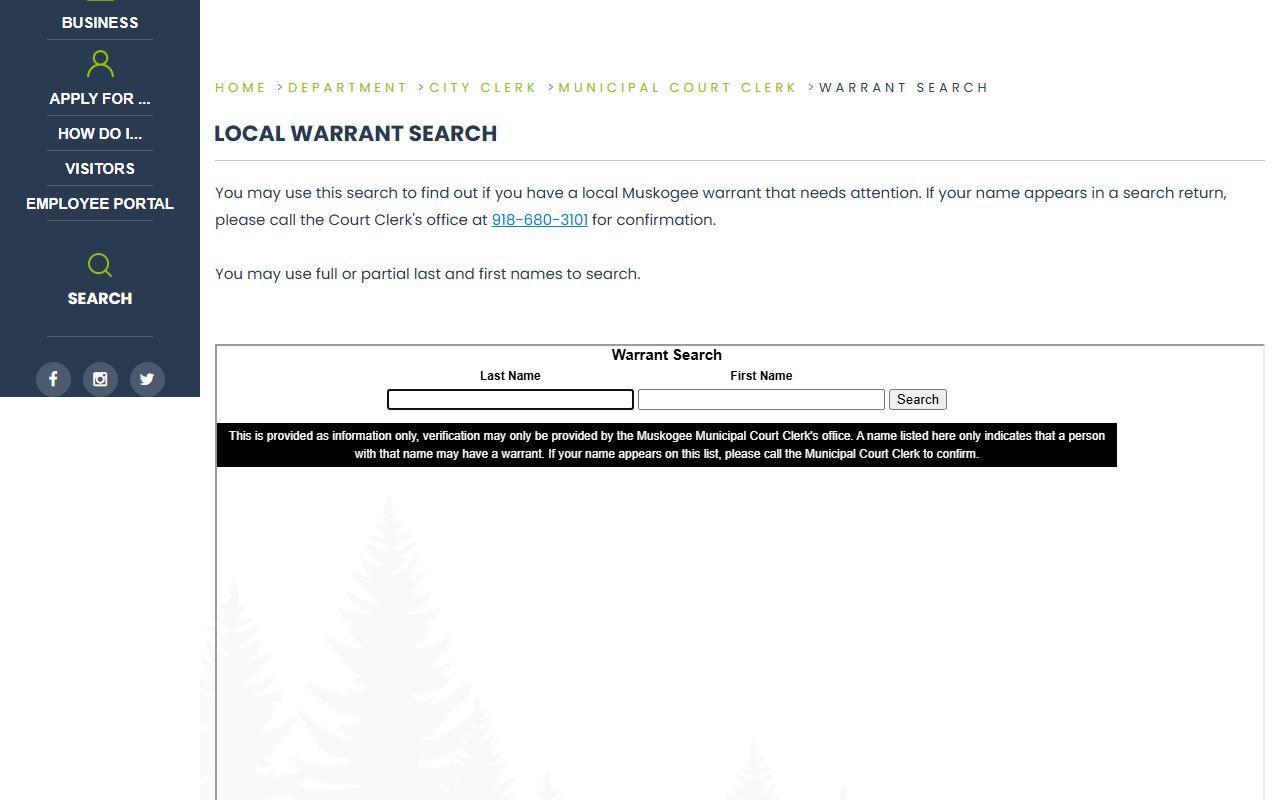
The page warns that a returned name still needs clerk confirmation before it counts as a live warrant.
The Municipal Court sits inside the Muskogee Police Station, and its office keeps weekday hours. A clerk can confirm the warrant, the charge behind it, and the amount due. The court's warrant line is 918-680-3101. Bring the citation number if you have one, since it speeds up the lookup and helps the clerk find the right case.
Muskogee County Warrant Search Fields
The local warrant search keeps its form simple. It asks for a name and nothing more. The table below lists what the city tool accepts and how each field works.
| Field Label | Type | Required | Notes |
|---|---|---|---|
| Last Name | Text | No | Full or partial last name allowed. |
| First Name | Text | No | Full or partial first name allowed. |
| Search | Button | No | Submits the local warrant search. |
Note: A common name can return several people, so the city tells users to confirm any match with the Municipal Court Clerk before acting.
Muskogee County Bench and Criminal Warrants
City warrants are only part of the picture. The District Court handles criminal and bench warrants in felony, misdemeanor, and other cases. Those orders show up as docket events inside a case file, not in a stand-alone warrant search. You can look for them through the state court portals that publish Muskogee County District Court.
The On Demand Court Records portal lists Muskogee County District Court and even carries Search Warrants as a case type. The Oklahoma State Courts Network offers a second path to the same court. Neither portal is a pure warrant index. They show warrant activity tied to a case, such as a bench warrant for a missed hearing or a recall once the person appears. The full case file, with charges and outcome, lives in the Muskogee County criminal court records.
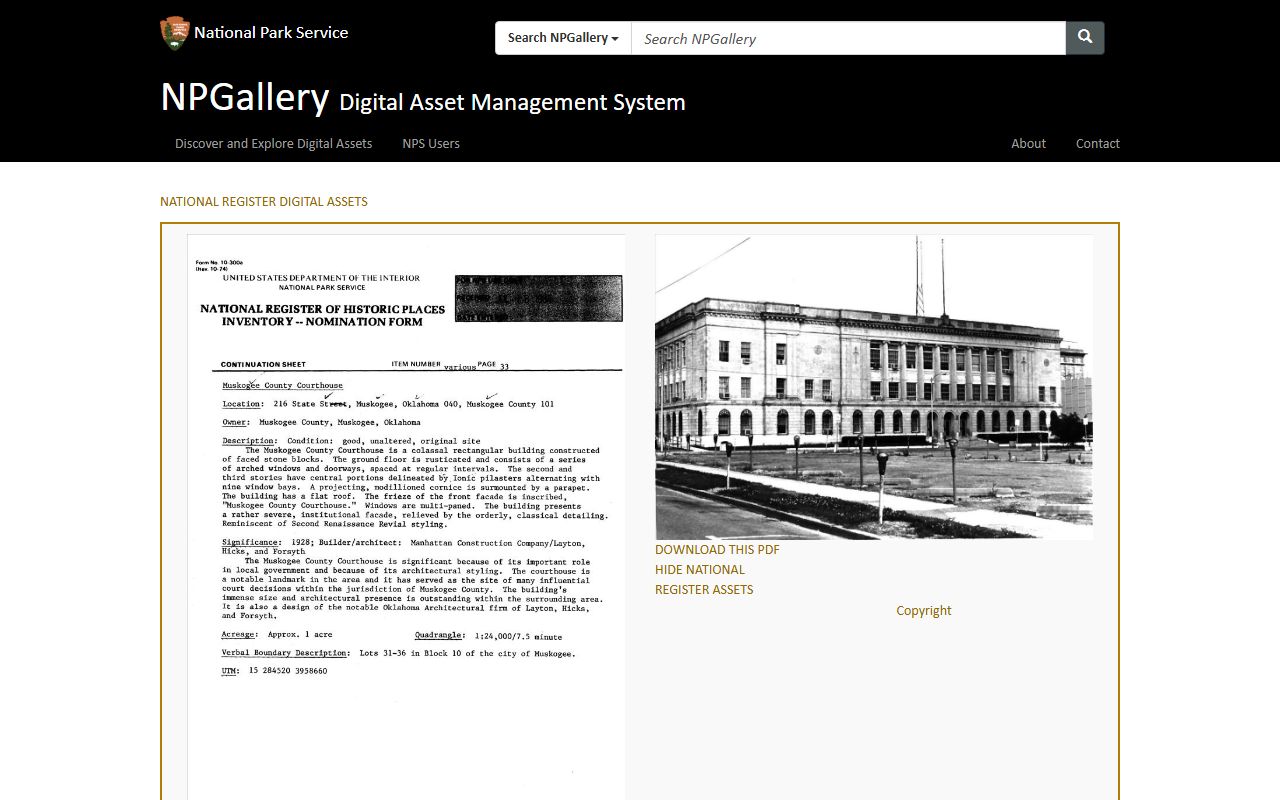
The District Court sits in the historic county courthouse downtown, a building on the National Register noted in its National Register listing. Warrant entries from that court become part of the public docket once a case is open and not sealed.
A county warrant often starts with a charge. The District Attorney for District 15 decides which arrest charges to file, and the District Court can then issue an arrest or bench warrant. ODCR also groups Tribal Courts, which matters in eastern Oklahoma where tribal jurisdiction can apply. A tribal court order is not the same as a state District Court warrant, so check the right court for the right case.
Muskogee County Sheriff Most Wanted
The Muskogee County Sheriff posts a Most Wanted page with photos and short profiles of people the office is seeking. It is a tip tool, not a verified warrant database. The office asks the public to send leads rather than act on them.
The sheriff Most Wanted page lets residents submit tips on a listed person from any device.
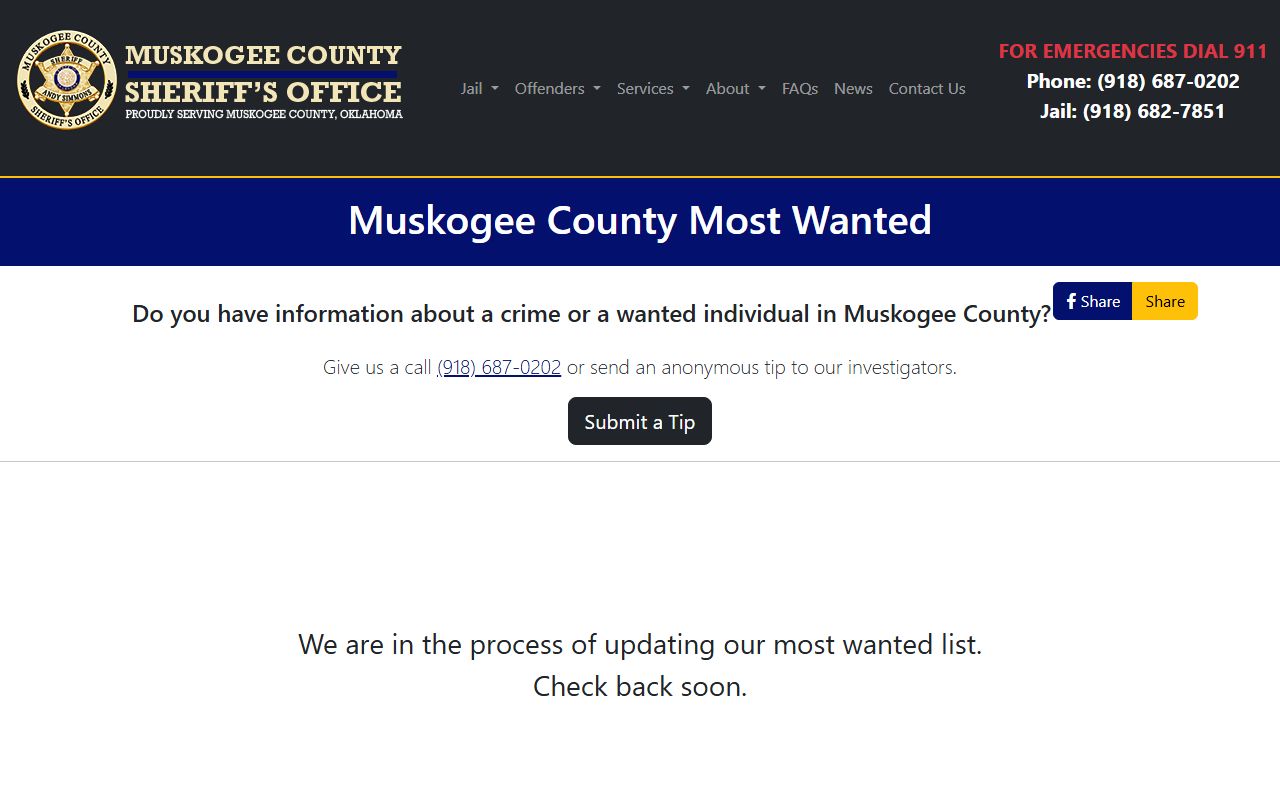
Each listing carries a short physical profile and a note on what the person is wanted for.
Important: The sheriff warns that the Most Wanted list may not be current, should not be used for any legal purpose, and that no one should try to apprehend a listed person. Report a sighting by calling the sheriff at 918-687-0202 or local law enforcement.
What a Most Wanted Listing Shows
Each Most Wanted profile follows a set format. The fields give a physical description and the reason for the listing. The table below shows what a typical entry includes.
| Field | What It Shows |
|---|---|
| Wanted For | The offense or warrant the person is sought on. |
| Bond Amount | The approximate bond tied to the case, which the page says may vary. |
| Sex | The listed sex of the wanted person. |
| Race | The listed race of the wanted person. |
| Hair Color | The listed hair color. |
| Eye Color | The listed eye color. |
| Last Known Location | The last place the office connects to the person. |
| Aliases | Other names the person is known to use. |
What to Do If You Have an Outstanding Warrant
An outstanding warrant does not go away on its own. It can lead to an arrest at a traffic stop, at work, or at home. The smart move is to deal with it on your own terms. For a city warrant, the Municipal Court FAQ says you can clear it by paying at the Court Clerk's office.
The city accepts cash, a cashier's check, a money order, or a credit card for warrant payments at the clerk's counter. Personal checks are not taken, and mailed payments must be a cashier's check or money order. Some older accounts get turned over to a collection agency, so the court may point you there for the balance. For a District Court bench warrant, the path usually runs through the case and an appearance before the judge, often with a lawyer's help. If an arrest does happen, the booking and release detail later shows up in the Muskogee County inmate records.
Acting early keeps a problem from growing. If you cannot pay by your court date, the city says to appear on or before that date and ask for a payment plan. A court date can also be rescheduled up to two weeks, one time only, by calling 918-680-3172. Ignoring a date is what turns a ticket into a bench warrant, so a quick call almost always beats silence.
Important: Talk to a lawyer before you turn yourself in on a felony or serious warrant, since one call can protect your rights and may set up a bond in advance.
Restricted Muskogee County Warrants
Not every warrant is public, and not every warrant is local. Search warrants can stay sealed while an investigation is open. Juvenile matters carry tight access limits. Records tied to sealed or expunged cases drop out of public view by law.
Oklahoma has no single statewide public warrant database confirmed for general use. Federal warrants are separate again. They come from the federal courts and federal agencies, not the county or city system. A Muskogee County or city search will not show them. When a warrant record is not online and is not sealed, you can still request it. The fallback is a direct request to the office that issued the order. That office may be the Municipal Court Clerk, the District Court Clerk, or the sheriff's Records Division.
Note: Law-enforcement records are public under 51 O.S. Section 24A.8, but active investigative details and sealed warrants can still be withheld.